 listicle
Buy Fresh Roasted Single Origin Coffee: 2026 Guide
Table of Contents
- Why Fresh Roasted Single Origin Coffee Tastes Different
- The World Pressing Collection: A Quick Comparison
- How to Buy Single-Origin Coffee Online Without Getting Burned
- Coffee Roasted to Order: Why Timing Beats Everything
- The 10 Pressings: Origin, Roast, and Tasting Notes
- Whole-Bean Coffee, Grind Options, and Bag Sizes Explained
- Is a Single-Origin Coffee Subscription Right for You?
- What You're Actually Paying For: Price and Cost Per Ounce
- Frequently Asked Questions
Last Updated: October 5, 2026
Why Fresh Roasted Single Origin Coffee Tastes Different
When you buy fresh roasted single origin coffee, you are buying a coffee that tastes like where it grew, not like a blend engineered for consistency. At Rhythm Industry Records Coffee Bar, we roast to order just hours before shipping. single origin coffee comes from one farm, cooperative, or region, so its flavor reflects one place, altitude, and processing method.
Freshness matters just as much as origin. Once roasted, coffee loses aroma and character within weeks, and mass-produced bags often sit in warehouses for months. Roasting to order skips that wait.
Below, we break down our ten World Pressing single-origin coffees, with origin, roast, altitude, tasting notes, and price.
Specialty Coffee Association guidance on freshness and quality
The World Pressing Collection: A Quick Comparison
Every pressing in our collection is a single-origin coffee sold at $21.99. Here is how the ten compare at a glance.
| Pressing | Origin | Roast | Tasting Notes | Best For |
|---|---|---|---|---|
| The Great Lakes Groove | Sipi, Uganda | Light-medium | Floral, chocolate, dark fruit | Pour-over drinkers who want contrast |
| The Volcanic B-Side | Matagalpa, Nicaragua | Medium | Cocoa, floral, citrus | Balanced daily cups |
| The High Note Pressing | Nyeri, Kenya | Light | Orange, lemon, floral | Bright, tea-like brews |
| The Original Pressing | Sidama, Ethiopia | Medium-light | Milk chocolate, fruit, caramel | Fruit-forward filter coffee |
| The Volcanic Vinyl | Antigua, Guatemala | Medium | Dark chocolate, bright fruit, butterscotch | Espresso and milk drinks |
| The Samba Side | Paraná & São Paulo, Brazil | Medium | Smooth, elegant, cocoa | Everyday drinking |
| The Pura Vida Pressing | Alajuela, Costa Rica | Medium | Apple, raisin, honey | Afternoon brews |
| The Classic Latin LP | Antioquia, Colombia | Medium | Dried orange, berry, chocolate | All-rounder |
| The Blue Island Groove | Kintamani, Bali | Medium-dark | Dark chocolate, molasses, brown sugar | Cold brew and French press |
| The Andean A-Side | Piura & Amazonas, Peru | Medium | Salted caramel, silky sweetness, citrus | Smooth, sweet mornings |
How to Buy Single-Origin Coffee Online Without Getting Burned
The biggest mistake when you buy single-origin coffee online is buying on origin name alone. "Ethiopia" on a bag tells you little if the roast date is missing, the roast level is wrong for your brewer, or the coffee has sat for months. Here is our framework.

1. Verify the roast date, not the best-before date
A roast date tells you when the clock started; a best-before date tells you nothing useful. Look for a printed roast date or a stated roast-to-ship window. Specialty roasters commonly roast within 24-72 hours of shipping; if a listing cannot say when it was roasted, treat that as a signal.
2. Match roast level to your brewer, not to fashion
- Light roasts reward pour-over, filter, and other methods that let you control extraction. They are denser and need hotter water and a slightly finer grind.
- Medium roasts are the all-rounders, forgiving in drip, pour-over, and espresso.
- Medium-dark roasts suit espresso, French press, and cold brew, where body and sweetness matter more than delicate acidity.
3. Read the processing method
Naturals, like our Ethiopia, carry more fruit; wet-hulled coffees, like our Bali, lean earthy and syrupy. Processing is often the biggest flavor lever after origin.
4. Check altitude and variety
Varieties matter too: SL28 and SL34 in Kenya, Bourbon and Typica in Guatemala, and heirloom cultivars in Ethiopia each push flavor differently. A listing naming farm, cooperative, altitude, and variety signals traceability.
5. Do the cost-per-ounce math before you commit
Bag size drives value far more than origin does. At a flat price per bag, cost per ounce drops sharply as size increases:
| Bag size | Approx. cost per ounce at $21.99 |
|---|---|
| 12 oz | ~$1.83 |
| 1 lb (16 oz) | ~$1.37 |
| 2 lb (32 oz) | ~$0.69 |
| 5 lb (80 oz) | ~$0.27 |
A 5 lb bag is a bargain per ounce only if you finish it while fresh.
6. Plan for shipping-to-delivery timing
Freshness is not just about roast date, it is about transit time. Ask how the coffee ships, whether it leaves the roastery within days of roasting, and how long delivery takes. A roast-to-order model that ships within hours protects aroma and flavor in a way warehouse-stored coffee cannot.
7. Preserve freshness after delivery
Once the bag arrives, storage decides how long it stays good. Keep beans in an airtight container in a cool dark cupboard and grind just before brewing.
Coffee Roasted to Order: Why Timing Beats Everything
Coffee roasted to order is roasted only after you place your order, so it ships within days of leaving the roaster rather than months. Aromatics fade first, then sweetness, then structure; a coffee excellent at the roastery can taste flat after crossing a warehouse and a shelf.
We ship free on orders, and every bag leaves our roastery hours after roasting, protecting the aroma and flavor that make single-origin coffee worth buying.
The 10 Pressings: Origin, Roast, and Tasting Notes
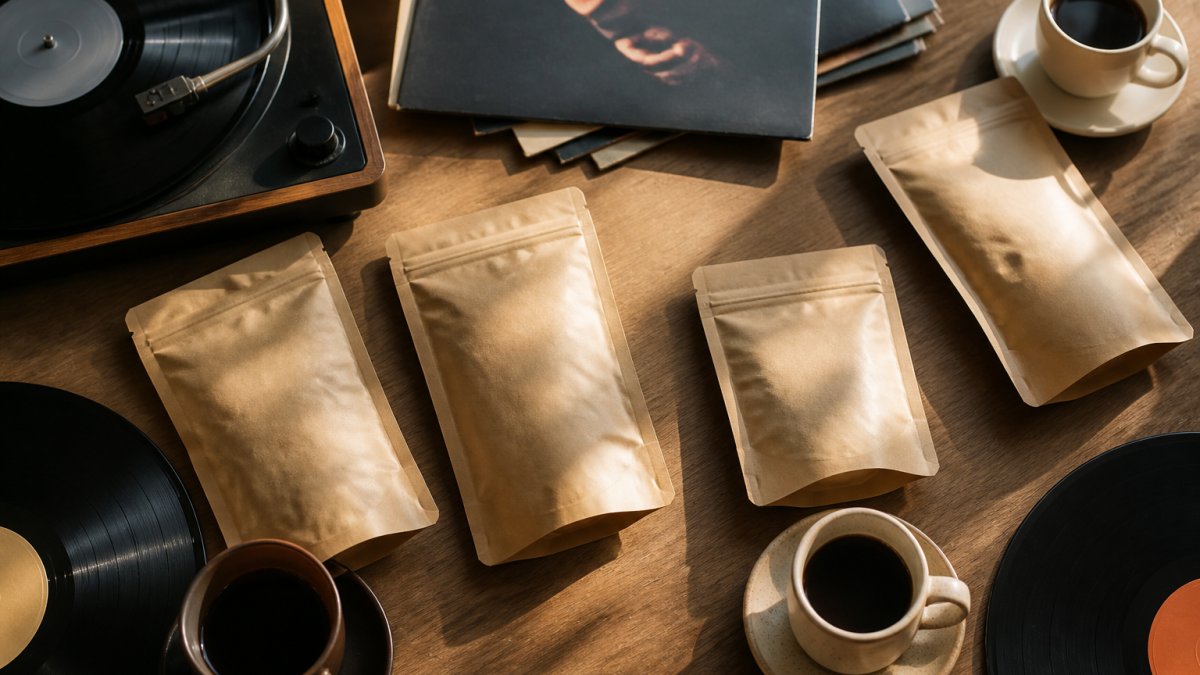
Each pressing is traceable to a specific farm, cooperative, or region. Here is what each tastes like.
Bright and Fruit-Forward: Kenya and Ethiopia
Kenya - The High Note Pressing comes from Othaya, Nyeri County, grown at 1,700-1,890 meters with SL28, SL34, Ruiru 11, and Batian varieties. Expect bright acidity, orange, lemon, floral notes, and an effervescent finish.

Ethiopia - The Original Pressing is a medium-light natural from the Sidama Zone, grown at 1,700-1,900 meters with indigenous heirloom cultivars. Milk chocolate, lively fruit, and caramel build a layered cup, the gentlest step into brighter territory.
Balanced and Chocolatey: Guatemala, Colombia, and Peru
Guatemala - The Volcanic Vinyl grows in Antigua at 1,200-1,616 meters in volcanic loam, with Bourbon, Catuai, Caturra, and Typica varieties. Dark chocolate, bright fruit, and butterscotch.
Colombia - The Classic Latin LP comes from Medellín, Antioquia at 1,300-1,500 meters. Dried orange, berry, and chocolate give it a familiar balance that works in almost any brewer.
Peru - The Andean A-Side is grown by the Cooperativa Agricola de Servicisios Norandino at 1,100-1,700 meters. Salted caramel, silky sweetness, and a citrus finish make it an easy daily rotation.
Uganda - The Great Lakes Groove →
Smooth and Deep: Brazil, Costa Rica, Nicaragua, and Bali
Brazil Santos - The Samba Side is pulped natural from Fazenda Santa Barbara at 750-1,050 meters. Smooth, elegant, and cocoa-forward, it is built for everyday listening.
Costa Rica - The Pura Vida Pressing grows on micro farms in Alajuela at 1,300-1,445 meters, eco-pulped and sun-dried. Sweet apple, raisin, and honey.
Nicaragua - The Volcanic B-Side comes from Molino Norte, Matagalpa at 900-1,590 meters, fully washed with a 12-14 hour fermentation. Cocoa, floral, and citrus.
Bali Blue - The Blue Island Groove is a medium-dark from Kintamani, wet-hulled and raised-bed dried at 1,200-1,600 meters. Dark chocolate, molasses, and brown sugar suit cold brew and French press.
Whole-Bean Coffee, Grind Options, and Bag Sizes Explained
If you own a grinder, buy whole bean and grind right before brewing.
We also offer Standard, Espresso, and Coarse grinds for anyone without a grinder.
Bag sizes run 12 oz, 1 lb, 2 lb, and 5 lb.
Is a Single-Origin Coffee Subscription Right for You?
The real question is whether a subscription matches your drinking pace, your curiosity about origins, and your tolerance for reordering manually. Here is how to decide.
Match the cadence to your consumption
Start with how fast you finish a bag.
Match the origin to your palate, not the label
A subscription is most valuable when it helps you compare origins side by side. If you love Kenyan brightness, a Kenya-forward rotation makes sense. If you are still exploring, a rotating single-origin subscription lets you taste Ethiopian naturals, Guatemalan washed coffees, and Balinese wet-hulled beans without committing to a 5 lb bag.
Weigh the cost-per-ounce trade-off
Subscription pricing usually sits between the 12 oz and 1 lb tiers, the sweet spot for most home drinkers: small enough to finish before freshness fades, large enough to beat the 12 oz cost per ounce. If you love a specific origin, buying the 1 lb or 2 lb bag outright is cheaper per ounce. If you want variety, the subscription premium is worth it.
Know when a subscription is the wrong call
Start with a sampler pack before committing to a recurring delivery.
What You're Actually Paying For: Price and Cost Per Ounce
Every World Pressing is priced at $21.99, regardless of origin or roast, so you choose by flavor rather than price tier.
Cost per ounce drops sharply as bag size increases: a 12 oz bag is roughly $1.83 per ounce, while a 5 lb bag brings the same coffee down to about $0.27 per ounce. If you know you love an origin, the larger bag is the better value.
Beyond the beans, you are paying for the roast-to-order process, free shipping on orders, and traceability back to a specific farm or cooperative. Mass-produced coffee is cheaper per ounce because it is roasted in huge batches and sits in distribution for months.
USDA guidance on coffee storage and food safety
Frequently Asked Questions
Where can I buy fresh roasted single origin coffee online?
Rhythm Industry Records Coffee Bar sells ten single-origin coffees online, all roasted to order and priced at $21.99 per bag. Each pressing ships within hours of roasting, so the bag that arrives at your door is days old, not months. You can order whole bean or choose standard, espresso, or coarse grinds, and bags come in 12 oz, 1 lb, 2 lb, and 5 lb sizes. Free shipping applies to orders.
How can I tell when coffee beans were roasted?
Look for a roast date printed on the bag, not a best-by date. A best-by date tells you when the coffee expires, not when it was roasted, so it hides how long the beans sat in a warehouse. Rhythm Industry roasts to order and ships within hours, so the roast date on your bag will be within days of arrival. Fresh-roasted coffee peaks in flavor roughly 4 to 14 days after roasting.
Is single-origin coffee better than a blend?
Neither is better, but they do different jobs. A blend is built for consistency: the roaster combines origins so the cup tastes the same every time. A single origin, like the Kenya High Note Pressing with its bright citrus and floral notes, shows you what one growing region and one harvest actually taste like. If you want to learn how altitude, variety, and processing shape flavor, single origins teach you faster.
Should I buy whole-bean or pre-ground single-origin coffee?
Whole bean keeps its aroma and flavor longer because the oils stay sealed inside the bean. Ground coffee exposes more surface area to air and stales faster, often within a week or two. If you have a grinder, buy whole bean and grind right before brewing. If you don't, Rhythm Industry offers standard, espresso, and coarse grinds, so you can still get fresh-roasted coffee matched to your brewer.
How long after roasting should you brew coffee?
Give beans 3 to 7 days after the roast date to degas, then brew within 2 to 4 weeks for peak flavor. Coffee releases carbon dioxide after roasting, which can make a very fresh cup taste flat or foamy. Once the bag is open, store it sealed at room temperature, away from light and heat. Skip the freezer unless you're storing a 2 lb or 5 lb bag long term.