 how-to
How to Store Coffee to Keep Fresh: A 2026 Guide
Table of Contents
- Why Coffee Goes Stale: The Science of Freshness
- How to Store Coffee to Keep Fresh: Core Rules
- Best Coffee Storage Containers for Your Kitchen
- Coffee Shelf Life After Roasting: What to Expect
- How to Tell If Coffee Is Stale
- Freezer, Fridge, or Pantry? Climate-Specific Storage Advice
- Frequently Asked Questions
Last Updated: September 27, 2026
Why Coffee Goes Stale: The Science of Freshness
Great coffee starts dying the moment it leaves the roaster. Oxygen, light, heat, and moisture begin pulling aroma out of the bean within hours. If you want to know how to store coffee to keep fresh, you first need to understand what you're fighting.
At Rhythm Industry Records Coffee Bar, we roast to order and ship within hours, so the clock starts later for our beans. That head start only matters if your storage keeps pace.
Oxidation, Degassing, and the Enemies of Flavor
Roasted coffee releases carbon dioxide for days after roasting. This process is called degassing, and it's why a freshly opened bag puffs up. Once most of that gas escapes, oxygen moves in.
Oxidation is the main thief here. It breaks down the volatile compounds that give coffee its aroma and flavor profile. The result? Flat, papery, stale coffee.
Three other factors speed up the decline:
- Light exposure fades the oils that carry flavor
- Heat accelerates oxidation and drives off aroma
- Moisture invites staleness and can ruin texture
The Specialty Coffee Association's freshness guidance notes that these four elements together determine shelf life far more than roast date alone.
How to Store Coffee to Keep Fresh: Core Rules
Here's the short version: store coffee in an airtight, opaque container, away from light and heat, at room temperature. That single habit does more for freshness than any gadget. Below are the rules that matter most.
Airtight Containers and One-Way Valves
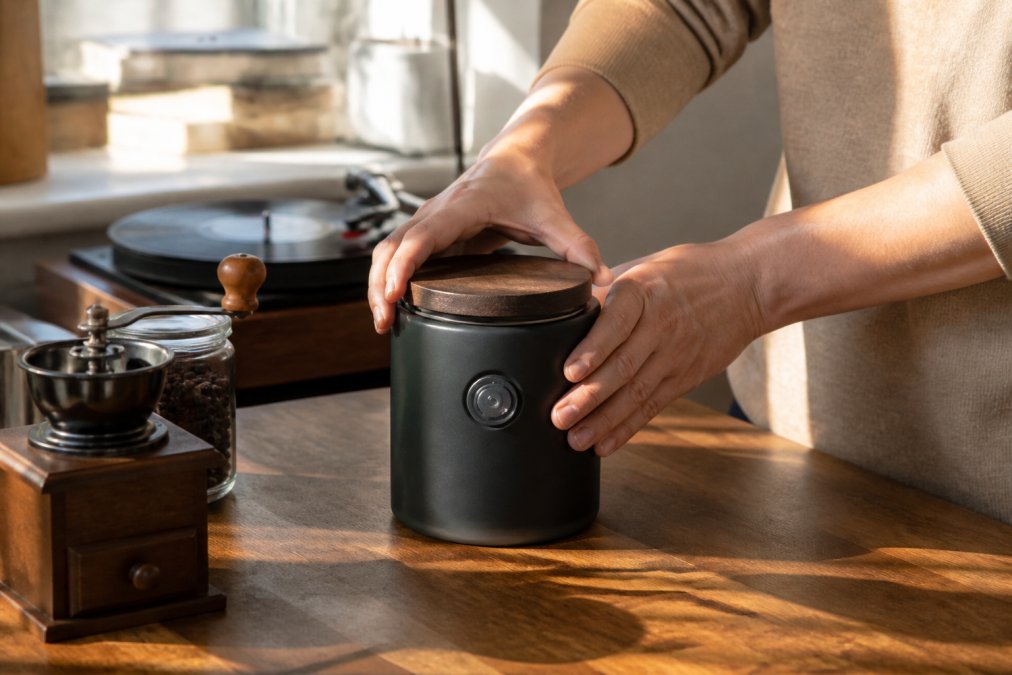
An airtight container blocks oxygen from reaching the beans. A one-way valve lets carbon dioxide escape without letting air back in. Together, they handle degassing and air exposure at once.
Look for containers that are:
- Opaque, so light can't reach the beans
- Sealed tight, with a gasket or clamp lid
- Fitted with a one-way valve for degassing
- Sized to fit your beans snugly, limiting trapped air
Many roasters, including us, ship beans in bags with one-way valves built in. If the bag reseals well, it's a solid short-term option. For daily use, a dedicated container is easier to open and close cleanly.
Light, Heat, and Moisture: What to Avoid
Keep beans away from the stove, the windowsill, and the dishwasher. Those spots spike in heat and humidity, and both push coffee toward stale.
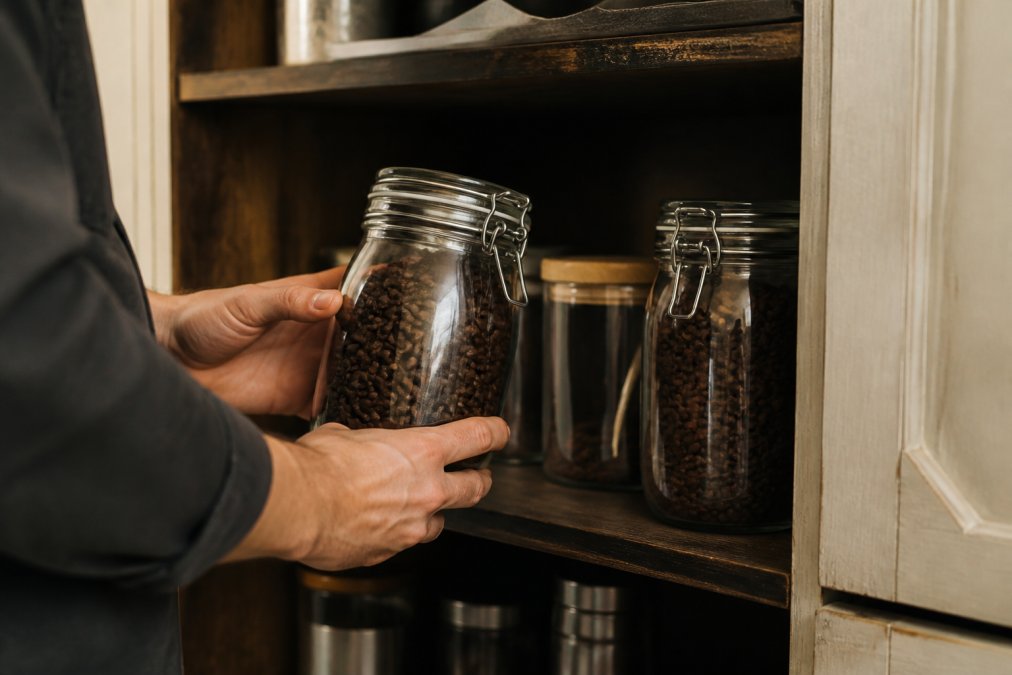
A cool, dark cupboard works well. So does a pantry shelf far from any heat source. Skip the clear glass jar on the counter, no matter how good it looks.
Best Coffee Storage Containers for Your Kitchen
The best coffee storage containers are opaque, airtight, and fitted with a one-way valve. But material choice affects more than looks, it determines how well the container blocks oxygen, light, and moisture over time. Here's how the main options compare, with the mechanisms that matter.
| Container Type | Air Seal | Light Block | Oxygen Transmission | Best For |
|---|---|---|---|---|
| Opaque ceramic with valve | Excellent | Yes | Near zero | Daily counter use |
| Stainless steel canister | Excellent | Yes | Near zero | Long-term pantry storage |
| Original bag with valve | Good | Partial | Low | First week after opening |
| Clear glass jar | Poor | No | Moderate | Display only, short term |
| Vacuum seal bags | Excellent | Yes | Near zero | Freezer portions |
| Plastic airtight container | Good | Partial | Low to moderate | Budget backup |
Ceramic is dense and non-porous, so it blocks light completely and doesn't absorb odors. The trade-off is weight and fragility, a ceramic canister that slips off the counter will crack. Stainless steel offers the same light and oxygen protection with better durability, but some cheaper grades can impart a metallic taste if the interior isn't food-grade. Look for 18/8 stainless steel.
Glass is the most common mistake. Clear glass lets light through, and light degrades the oils that carry flavor. If you must use glass, choose amber or opaque glass and keep it in a dark cupboard. Even then, glass is heavier and more breakable than ceramic or steel.
Plastic containers vary widely. Polypropylene (recycling code 5) is a decent budget option, but it can scratch over time, creating hiding spots for old oils and odors. Avoid any plastic that smells like chemicals when new.
Vacuum-sealed bags remove most of the air before sealing, which slows oxidation dramatically. They're ideal for splitting a large order into week-sized portions for the freezer. The downside is single-use plastic waste and the need for a vacuum sealer.
A common pattern among coffee professionals is to use a two-container system: a small ceramic or stainless container for the beans you'll brew this week, and a larger vacuum-sealed bag or stainless canister for the backup supply. Every time you open a big container, you expose all the beans inside to fresh oxygen. Smaller, more frequent transfers keep the bulk of your coffee fresher longer.
One more factor: container size. A container that's too large leaves excess air around the beans. A container that's too small forces you to cram beans, which can crush them and create more surface area for oxidation. Aim for a container that holds your typical weekly supply with just a little headroom.
Coffee Shelf Life After Roasting: What to Expect
Coffee shelf life after roasting depends on the bean, the roast, and how you store it. Whole beans kept in an airtight container peak between 5 and 14 days after roasting and stay good for about a month. Ground coffee fades much faster, often within a week.
Light roasts tend to hold up slightly longer than dark roasts because they retain more of the bean's natural structure.
Whole Bean vs. Pre-Ground Storage Requirements
Whole bean coffee keeps far longer than ground coffee. Grinding breaks the bean into tiny pieces, exposing far more surface area to oxygen. That's why grind size and freshness are linked so tightly.
How to Tell If Coffee Is Stale
Learning how to tell if coffee is stale saves you from brewing a disappointing cup. The signs show up in the bag, the grounds, and the taste.
Watch for these signals:
- No aroma when you open the bag or grind the beans
- Flat or papery smell instead of a rich, roasted scent
- Dull, muted flavor with none of the brightness you expect
- A quick, thin finish rather than a lingering aftertaste
- Excess oil or dryness on the beans, depending on age
Freezer, Fridge, or Pantry? Climate-Specific Storage Advice
Humid climates (tropical, coastal, rainy seasons): Moisture is the primary enemy. Beans absorb water from the air, which accelerates staleness and can lead to mold in extreme cases. Prioritize a tight seal, gasket or clamp lids outperform screw-top lids in humid air. Keep beans out of the open air as much as possible, and consider adding a food-safe desiccant packet to your storage container if you live in a very humid area. Avoid storing beans near a kettle, dishwasher, or any appliance that releases steam.
Travel Storage Solutions for Coffee Lovers
Travel wrecks coffee routines. Air pressure changes, cramped bags, and hotel room heat all work against you. But with a little planning, you can keep beans fresh on the road.
A few fixes help:
- Pack a small, hard-sided airtight container instead of a soft bag
- Keep beans in your carry-on, not checked luggage
- Use single-serve vacuum packs for short trips
- Avoid leaving beans in a hot car or sunny window
- If you're flying, pack beans in your carry-on to avoid pressure changes in the cargo hold
Frequently Asked Questions
Will coffee stay fresh in a Ziploc bag?
A Ziploc bag is better than nothing, but it is not a long-term solution. Plastic bags are not fully airtight or opaque, so oxygen and light slowly degrade the beans. If you must use one, press out as much air as possible, seal it tightly, and keep it in a dark cupboard. For coffee you plan to drink over several weeks, transfer it to an opaque airtight container with a one-way valve to protect aroma and flavor.
How long does coffee stay fresh after roasting?
Most coffee tastes best between 7 and 21 days after the roast date. Peak flavor typically arrives 3 to 7 days post-roast after degassing settles. After three to four weeks, oxidation and moisture exposure dull the aroma and flatten the flavor profile. Whole beans hold up longer than ground coffee, which can lose noticeable freshness within a week of grinding. Always check the roast date, not just the best-by date.
Should I store coffee in the freezer or the fridge?
The freezer works well for long-term storage if you portion beans into vacuum-sealed or airtight bags and let them thaw fully before opening. The fridge is a poor choice because temperature swings cause condensation every time you open the door, and coffee absorbs nearby odors. For daily use, keep a small supply in an opaque airtight container at room temperature, away from heat and light.
How can I tell if my coffee is stale?
Stale coffee smells flat or like cardboard instead of sweet and aromatic. The beans lose their sheen, feel dry, and may crumble rather than snap when broken. Brewed stale coffee tastes dull, papery, or sour with no distinct flavor notes. If your beans are more than a month past the roast date or have been stored in a clear container near a heat source, they are likely past their best.