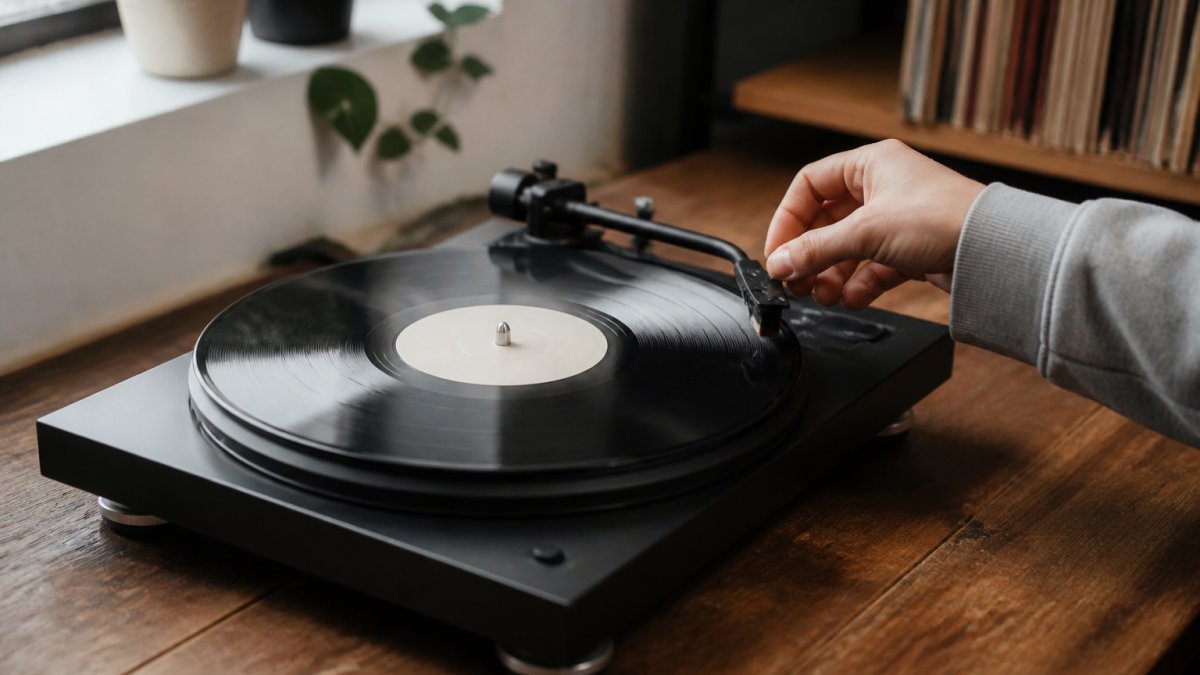
 comparison
Is a Manual Turntable Worth It for Beginners?
Table of Contents
- Manual vs. Automatic Turntables: What Actually Changes
- How to Use a Manual Turntable Without Damaging Your Records
- Pros and Cons of Manual Record Players for First-Time Buyers
- Sound Quality, Durability, and the Semi-Automatic Middle Ground
- Best Entry Level Manual Turntables: How to Choose in 2026
- Long-Term Cost of Ownership and Integration with Modern Audio Systems
- Frequently Asked Questions
Last Updated: September 30, 2026
Manual vs. Automatic Turntables: What Actually Changes
A manual turntable is a record player where you control every step of playback yourself: you place the record, move the tonearm by hand, cue the stylus into the groove, and lift it off when the side ends. An automatic turntable does those jobs for you with a motorized mechanism.
That single difference shapes everything else. Automatic models add convenience, but they also add mechanical complexity: levers, gears, and sensors that sit between your record and the music. Manual decks strip that layer out, which is why many vinyl enthusiasts consider them the purer option.

Here's what most buying guides get wrong. They frame manual versus automatic as beginner versus expert. In practice, the choice comes down to how you want to spend your listening time, not how much you know. This guide walks through the real trade-offs, the setup skills you'll need, and how to lower a needle without damaging a single groove.
How to Use a Manual Turntable Without Damaging Your Records
Learning how to use a manual turntable safely takes about an evening of practice. The fear of scratching a record is the main reason beginners hesitate, but record wear comes from three avoidable things: too much tracking force, a worn stylus, and dropping the needle by hand instead of using the cueing lever.
Get those three right and your vinyl stays in the condition you bought it.
Setting Up Your Tonearm, Tracking Force, and Anti-Skate
Setup is the part nobody warns you about. Every manual deck needs three adjustments before the first spin.
Balance the tonearm so it floats level, then dial in tracking force to the range your cartridge manufacturer specifies, usually printed in the manual. Set anti-skate to roughly match that force. This keeps the stylus centered in the groove instead of pulling toward one side.
Small errors here cause uneven groove wear over time. A cheap digital stylus gauge removes the guesswork. If you don't have one, a common starting point is to set tracking force at the upper end of the manufacturer's recommended range, many beginners find this reduces skipping on slightly warped records without accelerating wear noticeably.
The Cueing Lever and Needle Drop: A Step-by-Step Walkthrough
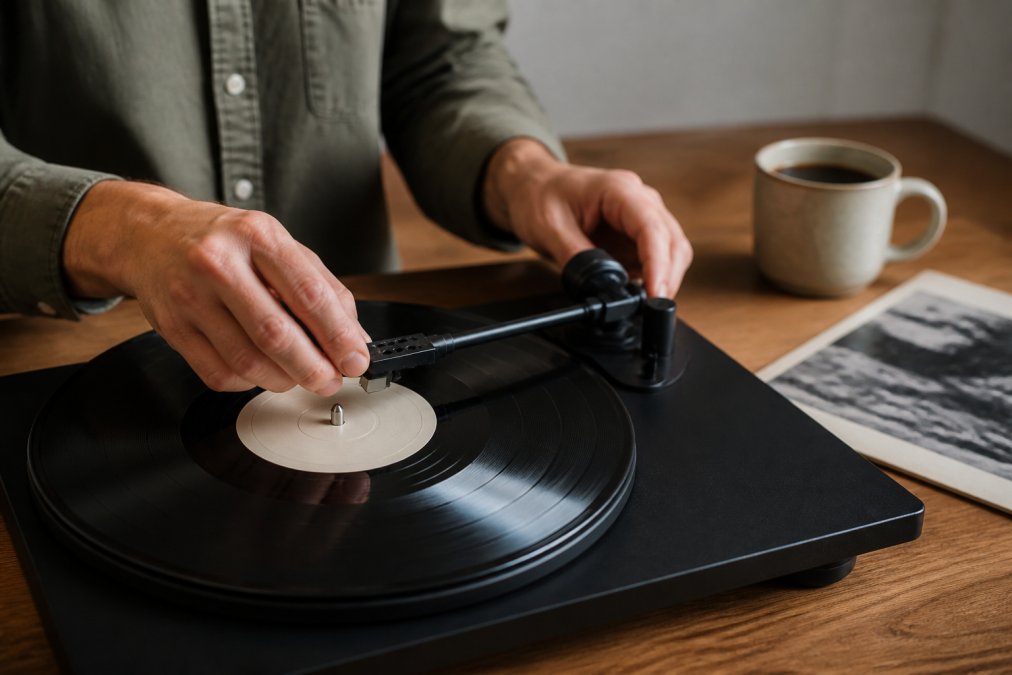
The cueing lever is your best friend. It lifts and lowers the tonearm hydraulically, so the stylus descends slowly instead of dropping.
- Place the record and start the platter
- Lift the tonearm with the cueing lever
- Position the stylus over the lead-in groove
- Lower the lever and let it descend
- At the end of the side, lift the arm and return it to its rest
Do this five times and it becomes muscle memory. If you're still nervous, practice with a cheap record you don't care about, the motion is identical, and you'll build confidence without risking a favorite pressing.
What About the Run-Out Groove and Auto-Stop?
One real risk with manual turntables is forgetting to lift the tonearm at the end of a side. The stylus sits in the run-out groove, spinning indefinitely, which wears both the stylus and the record. Some manual decks include an auto-stop feature that lifts the arm or cuts power when the side ends, check for this if you're prone to walking away. If your deck lacks it, set a timer on your phone for the length of the side as a backup.
A Note on Cleaning and Handling
Record damage often comes from handling, not the turntable itself. Always hold records by the edge and label, keep them in their sleeves when not playing, and use a carbon fiber brush before each spin to remove dust. A dirty record wears faster because dust particles act like sandpaper under the stylus. The Library of Congress offers free guidance on long-term record care if you want to go deeper.
Vinyl record care guidance from the Library of Congress
Pros and Cons of Manual Record Players for First-Time Buyers
The pros and cons of manual record players come down to control versus convenience. Manual decks give you direct command over the signal path and fewer parts to fail. Automatic decks handle the needle for you but introduce motors and linkages that eventually need service.
Manual turntable pros:
- Fewer mechanical parts, so less that can break
- Usually better sound at the same price because money goes into the tonearm and platter
- Full control over cueing, tracking force, and anti-skate
- Easier to upgrade a cartridge or tonearm later
Manual turntable cons:
- You must cue every side by hand
- Setup takes patience and a few basic tools
- No auto-return, so the stylus sits in the run-out groove if you forget
For a first-time buyer, the honest trade is this: manual rewards attention.
Sound Quality, Durability, and the Semi-Automatic Middle Ground
Sound quality on a manual deck typically edges out an automatic at the same price. That's not marketing. Automatic mechanisms add motor noise and vibration near the platter and tonearm, and vibration isolation matters for a clean signal path.
Best Entry Level Manual Turntables: How to Choose in 2026
Choosing among the best entry level manual turntables in 2026 comes down to four specs: drive type, tonearm quality, cartridge, and whether a preamp is built in.
What to check before you buy:
- Adjustable tracking force and anti-skate
- A replaceable cartridge, not a permanently mounted one
- Built-in phono preamp if your amplifier lacks a phono stage
- A platter that sits level and spins without audible motor noise
Belt-Drive vs. Direct-Drive: What Matters at Entry Level
Belt-drive decks use a rubber belt to spin the platter, which isolates motor noise and vibration from the record. Direct-drive decks use a motor connected straight to the platter, which reaches full speed faster and holds pitch under load.
| Drive Type | Strength | Weakness | Best For |
|---|---|---|---|
| Belt-drive | Isolates motor noise, lower cost | Slight speed drift, belt replacement | Quiet listening, tight budgets |
| Direct-drive | Fast startup, stable pitch | Motor noise risk at low price points | DJ-style use, quick cueing |
Long-Term Cost of Ownership and Integration with Modern Audio Systems
The long-term cost of ownership on a manual turntable is lower than most beginners expect. You replace a stylus every so often, and a belt on belt-drive models. There's no auto-mechanism to service, which is where automatic decks tend to rack up repair bills.
Integration with Modern Audio Systems: A Compatibility Checklist
Beginners often don't know if a manual turntable requires a separate preamp or specific speakers. Here's what you need to check before buying.
A Quick Word on Setup Costs
Beyond the turntable itself, budget for a few accessories: a carbon fiber brush ($10-$20), a stylus gauge ($15-$30), and possibly a record cleaning kit ($20-$40). These aren't mandatory on day one, but they protect your investment and improve sound. Total first-year ownership cost for a manual setup is often lower than an automatic equivalent because you're not paying for the auto-mechanism upfront or repairing it later.
Frequently Asked Questions
Is it better to have a manual or automatic turntable for a beginner?
It depends on how much hands-on involvement you want. Automatic turntables handle tonearm placement and return for you, which reduces the risk of a clumsy needle drop. Manual turntables require you to cue the arm yourself, but they give you more control over the listening experience and tend to have fewer mechanical parts that can fail. If you are willing to learn a short setup routine, a manual turntable is a rewarding starting point.
Do manual turntables sound better than automatic ones?
Not automatically. A well-built automatic turntable can sound just as good as a manual one. The advantage of manual designs is that they remove auto-mechanisms from the signal path, which can reduce vibration and motor noise. That said, the biggest factors in sound quality are the cartridge, stylus, preamp, and how well you calibrate tracking force and anti-skate. A properly set up entry-level manual turntable will outperform a poorly calibrated automatic every time.
What are the main advantages of a manual turntable?
Manual turntables typically offer better long-term durability because there are fewer moving parts to wear out. They also give you full control over cueing, which matters if you want to drop the needle at a specific track. Many models are upgradable, letting you swap the cartridge, platter mat, or tonearm as your budget grows. For vinyl enthusiasts who enjoy the ritual, that hands-on involvement is part of the appeal rather than a drawback.
How much should a beginner expect to spend on a manual turntable setup?
A realistic entry-level budget covers the turntable, a phono preamp if your amplifier does not have one built in, and possibly a new cartridge. Beyond the hardware, factor in records and a stylus cleaning kit. The long-term cost of ownership is lower with manual turntables because replacement styli and belts are widely available and inexpensive. Spending a little more upfront on a table with a standard tonearm mount saves money when it is time to upgrade.
What record players should beginners avoid buying?
Avoid all-in-one suitcase players with ceramic cartridges and no adjustable tracking force. These units often track too heavily, which accelerates groove wear and reduces component longevity. They also lack anti-skate adjustment and a proper phono stage, so records can sound thin and distorted. A better path is a standalone manual turntable paired with powered speakers or a receiver. That setup protects your records and gives you a clear upgrade path.